Veterans Are Fighting Far-Right Extremists With Evidence, Not Weapons. And It’s Working.
It’s old hat to say everything is bigger in Texas. True connoisseurs know that things in the Lone Star State are also often wilder and weirder than what you see on the evening news. Every two weeks, Steven Monacelli will explore the dystopic, desperate, and despicable realities of contemporary Texas and channel the sense of absurdity, anger, and anguish that is felt by so many Texans. State politics mirror our already overheated summers, while floods and hard freezes overwhelm our infrastructure, and disinformation erodes our social discourse. But not all is lost. Together, we can navigate this Hell & High Water to get to more stable ground.
As I wrote in my first Hell & High Water column, the threat of electoral disruption and violence is higher than ever. This is particularly true in Texas, where far-right extremist group activity is on the rise.
For this entry, I looked to the people trying to do something about it.
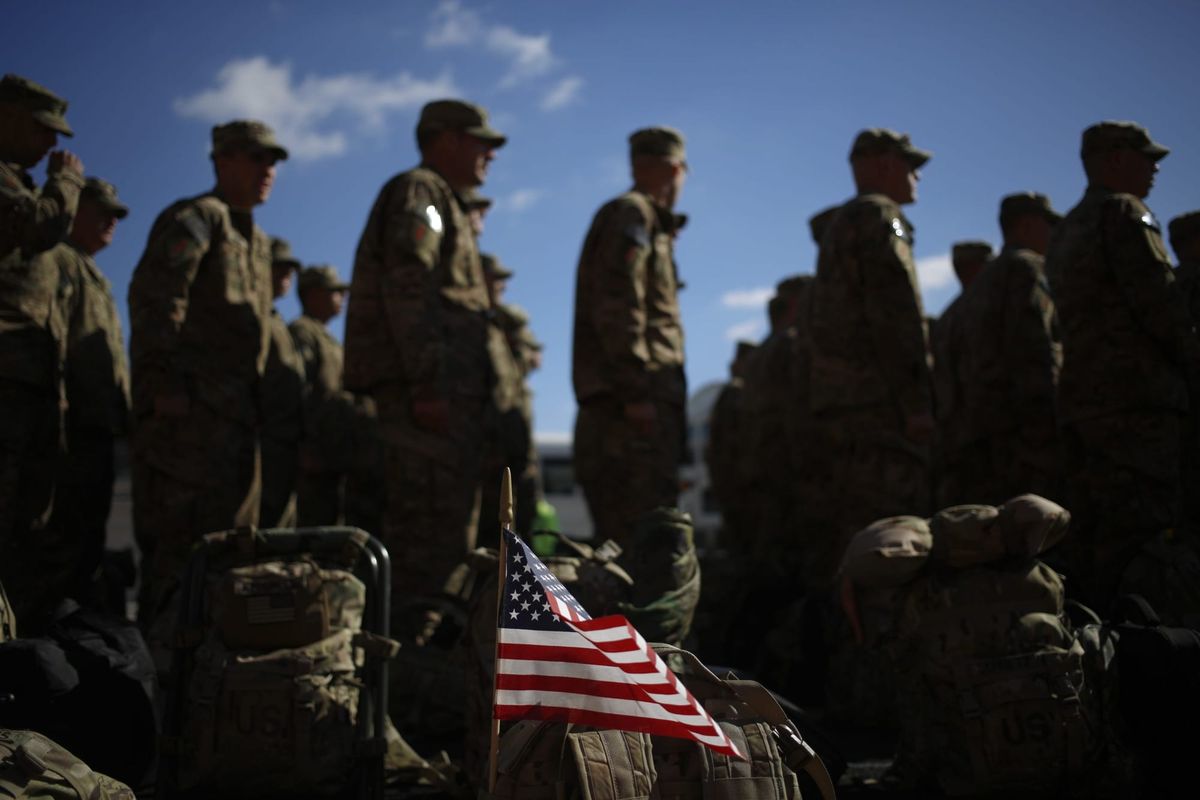
More than a dozen veterans gathered in a conference room in San Antonio earlier this month for a series of training sessions on how to counter far-right extremism in their local communities. The event was a collaboration between Common Defense, a grassroots progressive veterans nonprofit with members across the country, and the Task Force Butler Institute, a nonprofit dedicated to giving veterans skills to hold fascist groups accountable. It’s a part of a series of training sessions being held in Texas, Arizona, and North Carolina.
The training isn’t geared toward mobilizing armed veterans in the fashion of anti-fascists, who have sought to defend drag shows and other LGBTQ+ events across the state from far-right extremist threats through serving as physical deterrents to threats — and even arming themselves. In fact, Task Force Butler Institute explicitly teaches trainees to avoid direct engagement. Rather, the goal is to deliver evidence of offenses committed by extremists to law enforcement or victims, who can then hold them accountable in criminal or civil court.
The training is multifaceted: debriefing veterans on active extremist groups in their states and preparing them for what they might expect in terms of electoral disruption and political violence, as well as teaching how to document and report evidence of criminality.
“Hate groups operate using many of the same tactics of intimidation as the unlawful militias who are perpetuating the stolen election lies and doing things like intimidating voters, intimidating poll workers, and sending threats to politicians,” said Kristofer Goldsmith, an Army veteran and the founder of the Task Force Butler Institute. “What we teach in these trainings is going to be a skill set that is really valuable in November and beyond.”
Goldsmith started Task Force Butler Institute in 2022 with a goal to “impose legal, social, economic and political costs on domestic terrorists and those who enable them.” By December 2023, the State of Massachusetts filed a number of civil charges against the neo-Nazi group NSC-131 alleging civil rights violations, trespass, and conspiracy. Details of the attorney general’s filings are consistent with research that Task Force Butler Institute previously published as a roadmap for potential prosecutors, indicating that federal law enforcement takes these sorts of reports seriously. (Incidentally, a Texas neo-Nazi whom I unmasked in an investigative report for the Texas Observer was arrested by the FBI and indicted last week for making threats against the Nashville District Attorney.)
In addition to original research, the Task Force Butler Institute has published how-to guides for anyone who is concerned about the threat of extremism in their communities and wants to take a similar approach. With a presidential election right around the corner, their partnership with Common Defense aims to build a network of well-trained veterans who can monitor, document, and report on election disruption or violence.
“We've seen acts of extremist violence in this state for a long time,” said Lakiesha Lloyd, an Army veteran and staffer at Common Defense who grew up in the suburbs outside Fort Worth. “With this training, veterans are able to find like minded veterans who want to be able to create change in this state. It’s about helping them to understand how to identify the problems, create partnerships with organizations and other people, and document and call out extremist groups in their communities.”
This tradition of anti-extremist veterans goes all the way back to the namesake of Goldsmith’s organization, Major General Smedley Butler. In November 1934, Butler blew the whistle on a planned fascist coup aimed to overthrow President Franklin Delano Roosevelt that is now known as the “Business Plot,” a conspiracy with parallels to January 6. (The leaders of a congressional committee investigation were convinced Butler’s reports were “alarmingly true” but ultimately did not hold anyone accountable for the anti-democratic scheme.)
For veterans like Lloyd, countering hate and anti-democratic extremism is both a personal interest and a duty.
“We swore an oath to protect the Constitution and our country from threats,” Lloyd said. “Both foreign and domestic. And just because we are not actively serving doesn’t mean our oath went away.”