Texas’ First Nonbinary City Council Member Wants To Make Denton More Affordable, Equitable and Safe
As a seasoned community organizer, George Ferrie is part of a wave of millennials elected with a mandate for change, and they’ve got a detailed plan for making their city better.

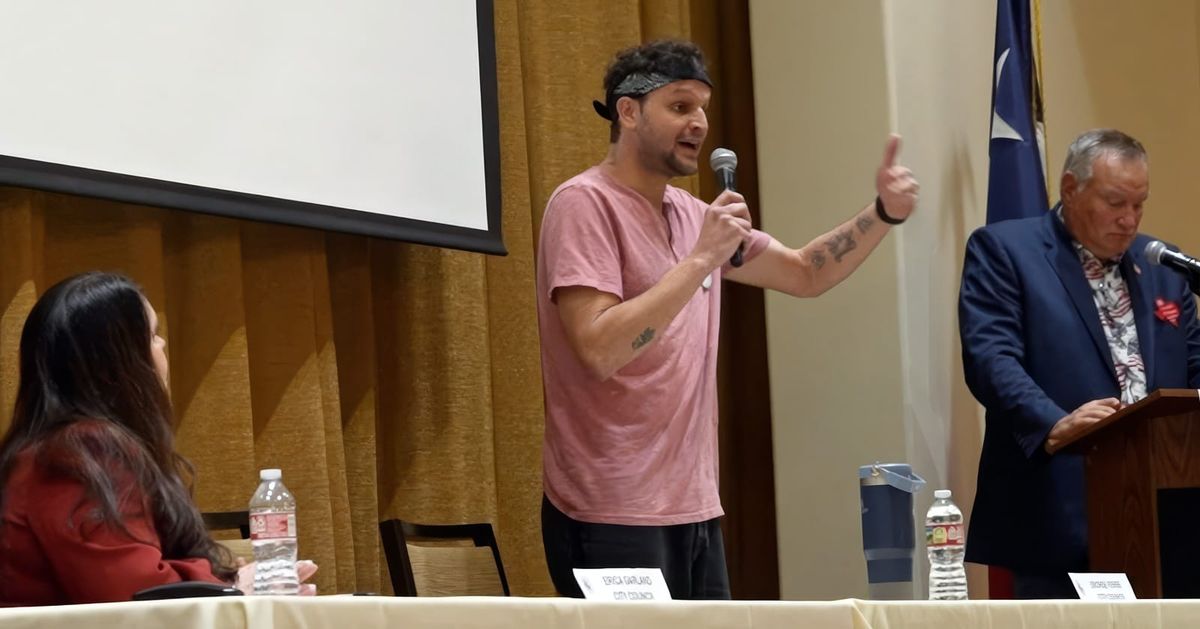
Texas just elected its first nonbinary city council member, who is also likely the first openly nonbinary elected public official anywhere in the state.
Despite all the challenges facing their city – from AI data centers sucking up resources to a rapidly worsening affordable housing crisis – and even after all the vitriol they faced during their campaign, they still believe in the future of Denton.
At 38 years old, George Ferrie, who won the office on June 13 after a divisive runoff election, is part of a wave of millennials elected to Denton’s city council. With their election, four out of seven of the city council members are under the age of 40, and Ferrie believes this generational shift is part of a mandate from local voters who want to feel represented by a diverse group that’s dedicated to making concrete improvements in their quality of life.
“I'm grateful that our city sees the need to have and prioritize young folk on council who have been through these systems and understand them more acutely to create actionable change in a time that feels really heavy and hard,” they told The Barbed Wire. “I actually do feel quite hopeful.”
Supported by Kind Clinic
A special thanks to Kind Clinic and Texas Health Action for underwriting our queer Texas coverage.
Even though they expected to face opposition, they were surprised by the intensity with which their campaign came under attack, with opponents going after everything from their sexuality to their work as a social worker who supports LGBTQ+ populations in the state. We spoke after Ferrie had taken a short vacation to recuperate from the campaign.
“I knew and expected that some harmful, hurtful things were going to be said,” Ferrie said. “I did not think it gets to the point where you've had people harassing my husband or my volunteers.”
Even so, Ferrie’s thrilled to be breaking barriers for nonbinary people in elected office, and knows that’s part of what appealed to voters in Denton, a progressive college town about forty miles northwest of Dallas.
“The reason I stayed in Denton this long is because I love it, right? I love this town. It's so supportive. It's so diverse.”

However, identity is just a small part of what Ferrie brought to the table for their city. Ferrie is an experienced community organizer, with a background that includes founding a theater troupe as a dancer and running a local wine bar before they started Radiant Counseling and Wellness Collective, their private social work practice. They’re on the board of Pride Denton, and were part of the campaign to pass Denton’s nondiscrimination ordinance, which is one of the most comprehensive in the state. For their successful campaign, Ferrie developed a progressive, data-driven platform that offers material solutions to what they see as the biggest issues the city needs to solve, especially a serious housing crisis.
“I've served on 12 different boards and nonprofits over the last 21 years, and one of them recently I just stepped off the board of is Denton Affordable Housing Corporation,” Ferrie said. The nonprofit aims to increase both the amount of affordable housing available in the region, and supportive services which help people stay in their homes. Today, Denton is the 15th fastest growing city in the U.S. according to census data, but the Dallas Fort-Worth region, as a whole, lags behind when it comes to the available inventory of affordable housing.
“DFW, currently, only has 14 homes for every 100 low or severely low-income family that needs a house,” Ferrie said.
Their solutions for the imbalance include making more efficient usage of recently passed housing bonds, looping in local nonprofits of all sizes that handle outreach to vulnerable populations, and educating landlords about the opportunities for tax breaks if they offer affordable housing.
“We have a long way to go to make sure that we're not only focused on the missing middle, which is imperative and important … but also, what type of responsible growth we want, and what that looks like.”
It’s a combination approach that Ferrie returned to multiple times during our conversation. Ferrie’s also worked with multiple local nonprofits and coalitions that serve Denton’s unhoused population, and is committed to increasing the amount of permanent supportive housing for those in need. They cited one upcoming project, McAdams Haven, as an example: an affordable housing complex expected to offer 84 units by the end of 2027, which is partnered with the county’s mental health services and other nonprofits to help the residents adjust and prosper.
“George has always been the kind of person that just shows up and will support even when it's a non-Denton Pride-related thing,” explained Kamyon Conner, executive director of the Texas Equal Access Fund, an abortion fund offering financial and emotional assistance to people seeking reproductive healthcare. Conner serves alongside Ferrie on the board of Denton Pride.
“I've seen them supporting the efforts when there was a freeze and people's pipes broke and didn't have access to water, and [when] we had a boil notice, George delivering water to people's doorsteps, including my own.”

Ferrie and Conner met around 2017 when Denton Pride began holding meetings at Ferrie’s former wine bar. They’ve been allies and collaborators on projects numerous times since then, from LGBTQ+ events to passing the nondiscrimination ordinance. Conner, who is also a social worker, said she acted as something of a mentor to Ferrie as they joined their field. She said social work has helped to inform Ferrie’s holistic approach to problem-solving.
“George really operates from that social work value of seeing people as full individuals and trying to find the best ways systematically to support those folks, especially those who are most at the margins, which are our communities that are unhoused, which are our BIPOC communities, and our queer and trans folks and our youth.”
Social work depends on cultural competence training and expertise – the kind of training that’s actively under attack by the Republican Party in our state. “You're not going to be able to silo yourself and work as a social worker, right?” Conner explained.
As a result, social workers are also well-acquainted with building power to push back against the far-right agenda. That’s important, since Denton has a history of having bipartisan initiatives overruled by Republicans at the legislature, from a historic local ban on fracking to cannabis decriminalization. With big dreams for Denton – from a diversion program for recently arrested unhoused people in a mental health crisis to restrictions on the continued buildout of AI data centers – Ferrie knows they’re likely to face opposition from the state.
However, Ferrie believes that there is a political change for good happening in the U.S., as progressive and socialist candidates get elected and even supporters of the right become disillusioned with how they’ve been failed by governments and politicians. “I'm very proud to be the first non-binary individual elected to public office in the state of Texas, and I think it speaks to this shift that we're seeing.”
And Ferrie is prepared to work across the aisle to build a better world, as long as people are willing to listen.
“You know the systems are broken; they're failing us, and we need people who have navigated those systems,” Ferrie told us. “We need people who are showing up for the community and who understand opportunities that exist and are willing to pull those levers and make things happen and have those hard conversations to educate folks when … they don't agree because they don't understand.”