Lawmakers Say Roberson Will Testify in Person — Even If Committee Has to Take ‘Field Trip’ to Death Row

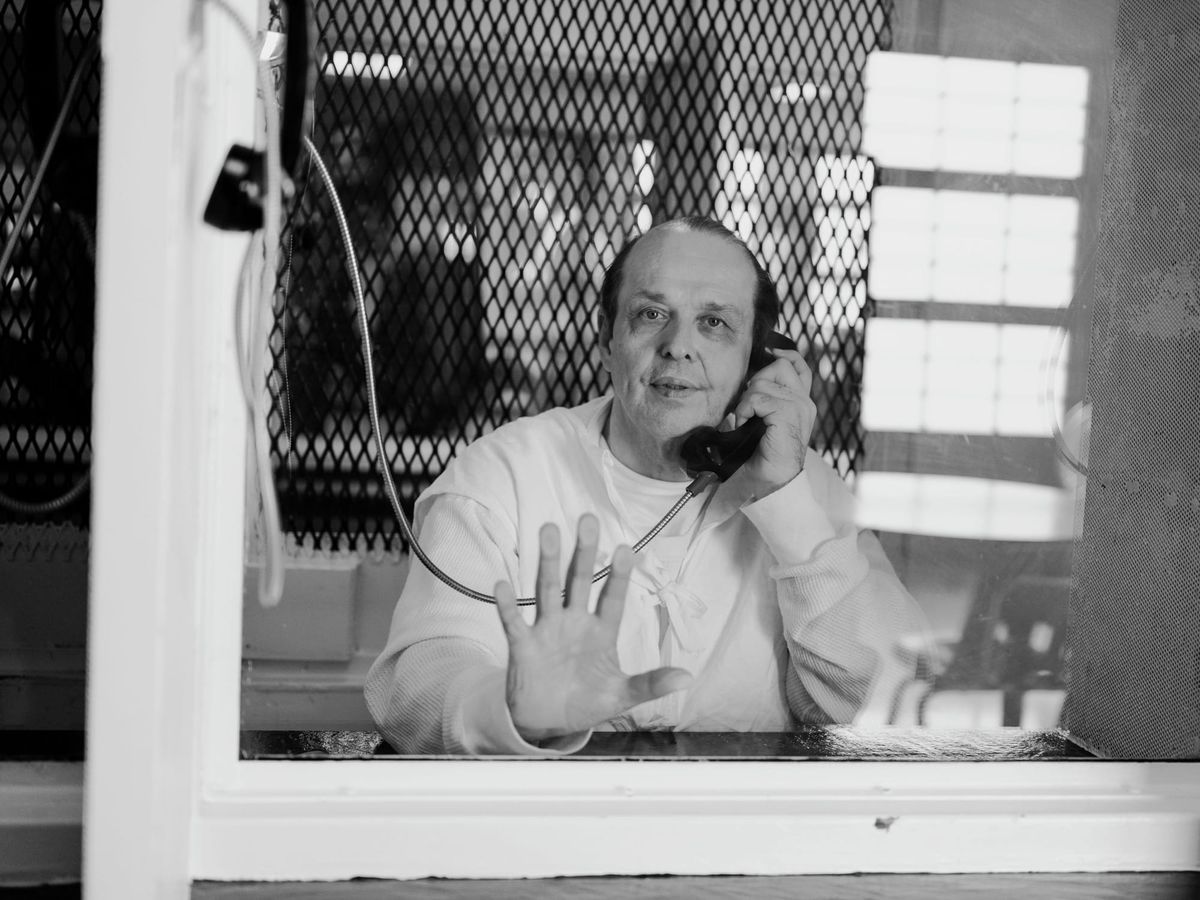
As Texas officials reached an impasse, Robert Roberson did not appear before the Texas House on Monday.
But he will testify, lawmakers said. Even if they have to drive to death row to make it happen.
Roberson, whose execution was delayed last week, was scheduled to testify before the Texas House Committee on Criminal Jurisprudence Monday morning in an historic moment for the state. But plans changed following a battle between bipartisan lawmakers, Gov. Greg Abbott, and the state attorney general.
Lawmakers had saved Roberson’s life on Thursday following an innovative subpoena, temporarily staying his execution until he could testify. But the attorney general’s office, on behalf of the Texas Department of Criminal Justice, dug in its heels and refused to transport Roberson, citing “public safety concerns” and offering a virtual appearance instead. Over the weekend, the Texas Supreme Court declined to step in.
Roberson’s attorneys said that alternative was “totally unworkable for multiple reasons,” including his autism diagnosis, and — faced with another bind — the House said it was considering a different novel strategy: moving the hearing to death row.
State Rep. Jeff Leach told CNN: “We’re going to make reasonable accommodations to ensure that his testimony is heard before this committee sooner rather than later.”
“The question now is whether he’ll show up today, whether he’ll show up at another date here at the Texas Capitol, or, if necessary, whether our committee will take a field trip,” said Leach, “to interview him in a public hearing there at the prison.”
The committee’s chair, state Rep. Joe Moody, confirmed in a text to The Barbed Wire on Monday afternoon that he and Leach had already asked the attorney general to discuss the “field trip” option with the Texas Department of Criminal Justice.
Roberson may have still been in Huntsville inside the prison’s walls on Monday, but the lines for entry to his hearing stretched into the hundreds, as reporters, advocates, and members of the public flooded the Capitol extension. The committee gaveled in around 12:30 p.m., about a half hour after it was scheduled to do so.
“There’s an enormous about of litigation on this topic, enormous amount of conversation on this topic,” said Moody, adding that he was “very disappointed.”
“There are dramatic ways that we could enforce that subpoena,” he continued, telling the public that his committee chose not to escalate “a division between our various branches of government” to avoid what he termed a “constitutional crisis.”
At the same time, “Our committee simply cannot agree to video conference,” said Moody. “I considered his needs as a person with a disability above all other things.”
Moody said the state attorney general’s office was still in talks with the committee on the logistics “even now.”
The legal wrangling capped weeks of dizzying drama, arcane jurisdictional arguments, and power struggles.
Roberson’s execution was halted Thursday evening — hours after he was to be put to death at 6 p.m. — by the Texas Supreme Court. Before the lawmakers’ involvement, Roberson’s attorneys had sought reprieves and clemency from the Court of Criminal Appeals, the U.S. Supreme Court, an Anderson County district judge, the Board of Pardons and Paroles, and the governor himself.
Roberson, 57, was convicted in 2003 for the death of his 2-year-old daughter, Nikki, following an illness with a fever. An autopsy concluded she had died from shaking and blows but a detective who played a key role in the investigation now supports his claims of innocence. “The case against Robert has no foundation in physical evidence of any kind,” former detective Brian Wharton wrote in his letter to the Texas Board of Pardons and Paroles. “We have moved well beyond a reasonable doubt. There is no evidence of a crime, much less a capital crime.”
On Wednesday, it looked like the end was finally at hand for Roberson, with one day to go before his execution. Both the Texas parole board and the Texas Court of Criminal Appeals rejected his final appeals.
But members of the House committee issued a subpoena, asserting that Roberson could provide crucial testimony about Texas’ 2013 junk science law — a law Roberson had unsuccessfully tried to use to prove his innocence. The unprecedented, novel strategy of issuing a death row inmate a subpoena to testify was crafted by state representatives Joe Moody (a Democrat) and Jeff Leach (a Republican), and it required persistence. After a district court granted a temporary restraining order, an attorney for the state asked the Court of Criminal Appeals to throw out the subpoena. Lawmakers had to appeal once more to the state’s Supreme Court.
The 2013 law aims to give defendants the chance to prove their innocence if their conviction was based on scientific evidence later deemed unreliable.
As Leach put it on Monday, Roberson was “20 minutes and 20 steps” from death when the courts intervened. “If we can’t speak up and step up and work together to fix a system ... that needs fixing, that has failed Robert and has failed Nikki, then what are we even doing?”
The hearing featured hours of testimony from television personality Phil McGraw and author John Grisham, both in defense of Roberson.
Last month, more than 80 Texas lawmakers wrote to the Texas parole board urging clemency for Roberson. They were joined by the lead detective on the original case, more than 100,000 petitioners, experts, advocates, and the novelist John Grisham, among others.
Even the U.S. Supreme Court said on Thursday that “under these circumstances, a stay permitting examination of Roberson’s credible claims of actual innocence is imperative.” The court even urged the governor to exercise his executive powers to “prevent a miscarriage of justice.”
Until now, Abbott, who has the power to grant Roberson a 30-day reprieve, had remained silent through the recent events. But on Sunday, Abbott’s general counsel argued in a filing to the Supreme Court that the House committee’s subpoena should be tossed entirely.
“The power to grant clemency in a capital case, including a 30-day reprieve, is vested in the Governor alone,” wrote James Sullivan, calling the House’s bipartisan creativity in prolonging Roberson’s life an overreach. “Actions by a single committee of a single chamber of the Legislature have had the effect, both legally and factually, of granting (at least) a 90-day reprieve.”
“Unless the Court rejects that tactic, it can be repeated in every capital case, effectively rewriting the Constitution to reassign a power given only to the Governor,” Sullivan added. “The House Committee on Criminal Jurisprudence has stepped out of line.”
On Thursday, upon hearing the news of his reprieve, Roberson “praised God and thanked his supporters,” said Amanda Hernandez, the director of communications for the Texas Department of Criminal Justice.
Editor-in-chief Olivia Messer contributed reporting to this story.