Trans Teen From Rural Texas Forces High School to Change Transphobic Dress Code
With help from the ACLU of Texas, Groesbeck ISD agreed to drop a dress code that targeted transgender students.

In a small Texas town of less than 4,000 people, one transgender teenager fought back against her school district’s transphobic dress code and won.
Amid rising anti-LGBTQ+ bigotry in our state, the teen known as “Emma Doe” showed that it is possible to successfully push back against bigoted policies and make room for queer and trans young folks to be themselves. Her case also highlights the often overlooked problem of restrictive dress codes in schools and how they can hurt marginalized students from a variety of backgrounds. It's a separate, parallel issue to the rise of censorship in school libraries and laws like Texas SB 12, the so-called “Parents Bill of Rights,” that restricts many students from using their chosen names and pronouns and limits the ability of teachers to support LGBTQ+ students. Although it receives less attention, dress codes are crucial to students' ability to express themselves and their identities at school.
Upon meeting Emma, who is now 18, I was immediately struck by her extremely strong sense of self; this is a young woman who very much knows who she is. And part of that is a very well-defined and eclectic fashion sense.
“I have some boho things in my closet,” Emma told us, “I have some Western things in my closet, some more contemporary looks, I even have a couple things that are very Victorian-coded. I like everything.”
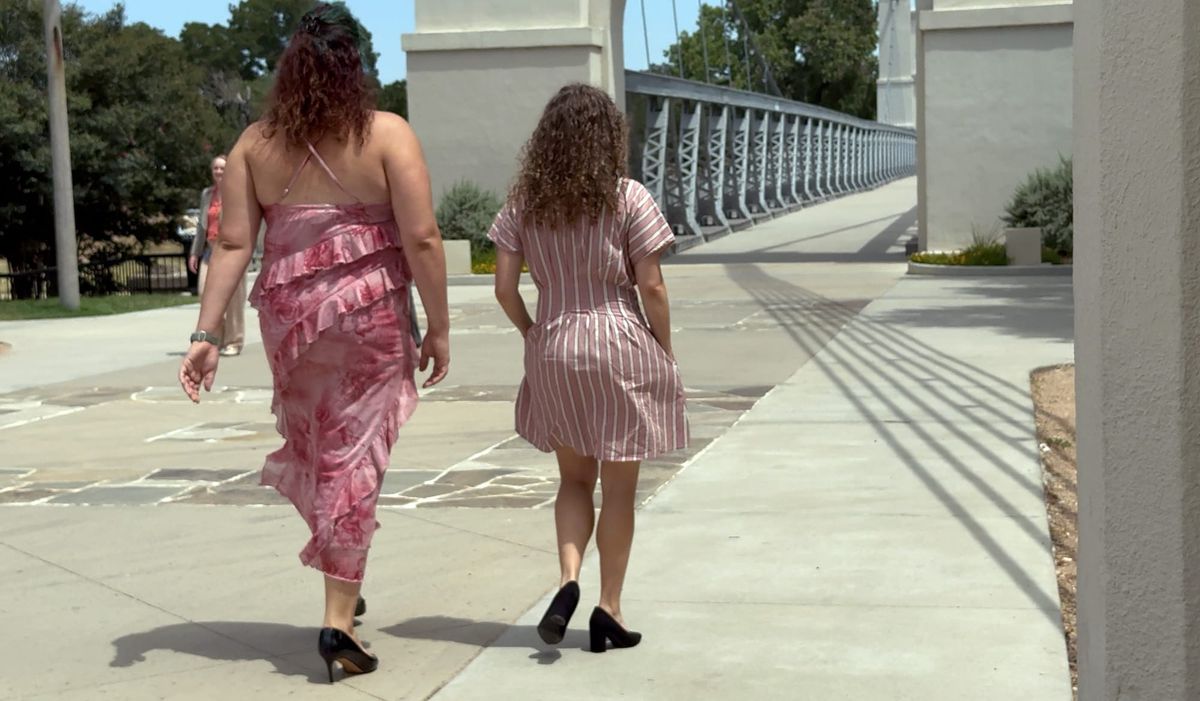
When we met in Waco, she wore a ruffled and strappy dress printed with pink roses that contrasted beautifully with her brightly-colored dyed hair. But Emma actually lives with her family in Groesbeck, population 3,631, about 40 minutes to the east.
(The ACLU of Texas gave her the pseudonym “Emma Doe” to protect her from unwanted attention as a result of her court case against Groesbeck ISD, and The Barbed Wire agreed to use this name in our coverage.)
Growing up, Emma Doe discovered a love of learning but also that being a queer and – at the time, closeted – transgender student drew a lot of negative attention and bullying. Her school's dress code didn't help her feel like she could be herself, either, especially during its most restrictive years. Emma endured several different waves of policies that affected what she could or couldn't wear and how she presented herself.
“In middle school, they had the traditional [dress code]: boys can't wear earrings, boys can't have hair longer than their collarbones, and then they got rid of the hair length.”
By eighth grade, and then as she transitioned into high school, the dress code had become refreshingly gender neutral, although the implementation of the policy wasn’t perfect.
“Administrators and faculty at the school have always and stereotypically tended to target the female population more … because I can name a bunch of boys at the school who broke dress code every day and never got anything said to them about it,” Emma recalled.

But that changed in the summer of 2023, when the school board voted to institute a dress code which banned transgender students from wearing skirts and dresses. According to Chloe Kempf, a staff attorney at the ACLU of Texas who represented Emma, this dress code was an outlier even in a state where such restrictions are all too prevalent.
“It was one of the worst dress codes we've seen in terms of singling out transgender students directly,” Kempf said. “And this is a small school district, so Emma being one of only a very few transgender students, it felt very targeted and very stigmatizing and harmful.”
Although the dress code at Groesbeck ISD was extreme, research by the ACLU of Texas has found that far too many schools put restrictions on how their students can express themselves in ways that have little to do with classroom discipline. In a 2024 survey, which looked at dress codes in 1,200 Texas schools, over half had policies based on harmful and outdated rigid gender norms. Over 300 of the school districts restricted the hair length of those perceived to be boys – a holdover from 1960s culture war battles that continues to hurt both cis and trans students alike.
Queer and trans kids aren't the only ones that suffer under these dress codes: students from marginalized religious and racial groups can also find their freedoms restricted. For example, 80 percent of dress codes prohibited essentially all head coverings without apparent exceptions for religious and cultural expression. By the time of the ACLU of Texas survey, most but not all schools had altered their dress codes to remove bans on hairstyles and textures associated with race in order to comply with the CROWN Act. After the state adopted this law in 2023, school districts were prohibited from implementing racist restrictions on hair. However, 80 percent of districts have vague and subjective hairstyle policies which could still be used in a racially-motivated fashion.
Kempf told us that she believes dress code policies which are less restrictive and more affirming contribute to better outcomes for students and teachers. Letting “students show up at school as their authentic selves actually improves the school environment because all students see that if there's something a little bit different about them, that's going to be still welcome at school, and that they can feel free to express their differences and be proud of who they are.”
While the previous dress code at Groesbeck ISD was an example of how wrong things can go when policies are made without a student's best interests at heart, Emma's story also offers a potential pathway to fighting back against these troubling school board decisions. Even before the ACLU of Texas got involved, Emma and her mother had spent months advocating for her to school administrators, the superintendent and the school board, and Kempf said that might have been the key to her success.
“They had really done so much of the legwork and exploring all possible avenues of relief that basically we just came in as pinch-hitters at the end and said, ‘Okay, let's help get this over the finish line,’” Kempf explained.
At the start of Emma's sophomore year, her high school principal warned her about the newly restrictive dress code, and explained her options for fighting back.
“‘I'm gonna help you understand the steps that you need to take to get this all the way to the school board because it's the school board that made that decision,’” Emma recalled her principal saying. “She told us about the grievances process and how to properly go about it.”
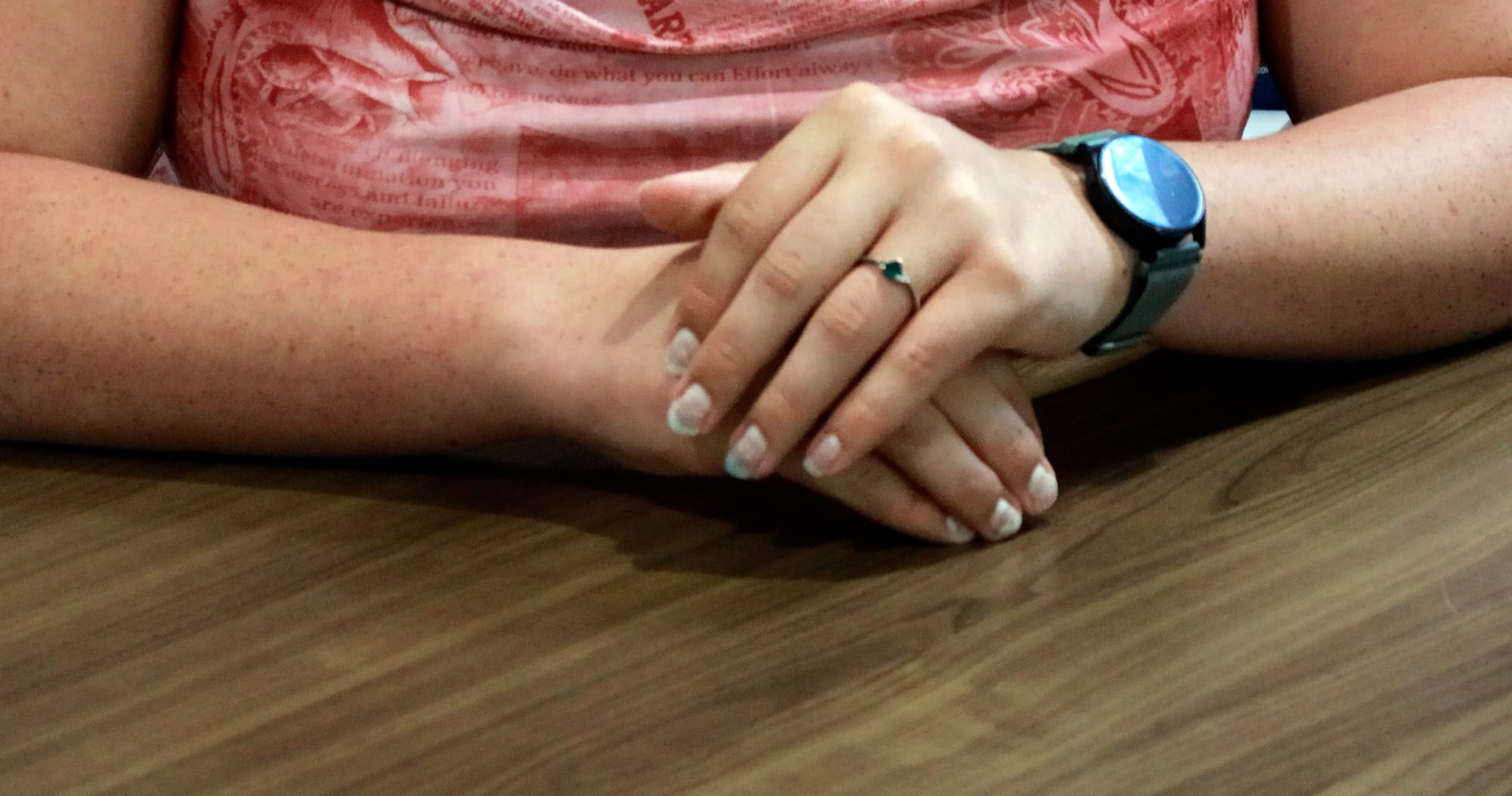
Kempf explained that all Texas schools are required by law to offer a clear grievance process. Even so, that process was a lengthy one, requiring meetings to be scheduled at each level from principal to superintendent and beyond, even though the decision ultimately lay with the school board.
“So it was, you set up this meeting, and then you take a day and you do the meeting, and then they can't do anything for you. So then it's two months later, whenever you have your next meeting,” Emma said.
Luckily, Emma's mother was willing to take on much of the work involved in filing grievances and following up on them. In January of 2024, Emma's family even went so far as to file a Title IX complaint against the dress code with the U.S. Department of Education’s Office for Civil Rights.
Because of the years-long process and potential court case, Emma knew it was possible she might graduate before the matter was resolved. But she knows other queer and trans young folks in Groesbeck, and it was important to her that future students wouldn't struggle with their ability to express themselves in the same way as she had. “There's actually quite a decent sized community of us in my town, and I am friends with a lot of them.”
Luckily, the district decided to settle with Emma rather than take things all the way through a legal battle. As Kempf explained, “The immediate outcome is that Emma got to finish out senior year wearing all of her fabulous skirts and dresses, walk the stage at graduation in a beautiful dress, and for all the students that will come after her, this really unjust rule will no longer be on the books, and every student in the district is now going to be treated the same regardless of their sex assigned at birth or their gender identity, which was you know one of our main priorities in this case.”
Although the district's 2026 dress code no longer targets transgender students, it still leaves a lot to be desired. The current version bans all students, from seventh to twelfth grades, from wearing skirts or dresses, regardless of gender.
“We'll have to see how it's enforced, but it is a win for us in that every student is going to be treated the same,” Kempf said. “No student is going to be singled out.”
Groesbeck ISD did not respond to requests for comment sent by phone and email.
Emma said she has family in Colorado, And she did consider moving up there after learning about the transphobic dress code. So many transgender people have fled Texas as a result of policies like these that Seattle considered declaring a state of emergency earlier this year.
“I didn't want to leave my support system here,” Emma said. “Some people don't have the ability to [leave], and I also had to think about those people.”
Now that she's graduated, Emma has her education planned out and hopes to follow in the footsteps of family members who have worked in medical fields.
“I'm going to a junior college this year and next year, and I'm going to get my associates in biology, and then I plan on moving up. I don't know where I want to go for my university yet, but I want to get my microbiology bachelor's, and then a master's in something related to viral science or immune science, and then a doctorate one day.”
The ACLU of Texas has a resource guide for students and families who are facing similar restrictive policies. Kempf cites the CROWN Act as an important first step towards fixing the state's dress codes, but would like to see these laws expanded to protect more students and additional groups. “We know the Constitution says you have to treat boys, girls, and non-binary students equally but I would like our state laws and our school board policies to reflect that more clearly.”
She also said it's up to all of us to protect students like Emma from unjust policies. “It's incumbent on all of us as community members, whether we go to school or have kids in school or not, to stand up and communicate our values to our elected representatives. Go to your school board meetings, write op-eds, make your voice known that you think that students in your community should all be treated with dignity.”
As for Emma, like so many trans people, she looks forward to the day when politicians care less about how she dresses or what she does. Until then she needs more allies to stand up.
“Let me be, and I'll let you be,” she said. “And if somebody were to come and challenge your rights, I would be there to help you. So I would love it if they would be there to help others.”
Mario Leal contributed reporting to this story.