‘I feel like I can exhale’: Will the Blue Tsunami bring relief from attacks on LGBTQ+
One rural queer Texan told The Barbed Wire, “Even if it's not forever, right now ... The target will be off our backs. I think. I hope.”

“I’m stunned, I literally feel like I don’t know how to properly celebrate.”
Josh Tutt, a gay man from rural Burleson county in Texas, was far from alone in expressing shock at the momentous victory by Democratic candidates across the ballot in the 2026 midterm election. Queer and trans residents across Texas expressed relief after last week’s historic “blue tsunami.”
“I feel like I can exhale. Like I can relax the tension in my shoulders. I feel safer. I feel hopeful that some legislative harm might be fixed,” Tutt wrote to us via the social network Threads.
He added, “Even if it's not forever, right now... The target will be off our backs. I think. I hope.”
Tutt had previously told us he simply wanted more politicians in office who “don’t proactively hate us.” But after the Democrats' sweeping victory, which claimed control of numerous statewide offices and the Texas House of Representatives, he seemed willing to dream a bit bigger.
Recent legislative sessions have seen hundreds of bills targeting the rights of LGBTQ+ people, and trans folks in particular. Tutt said he hoped the legislature would repeal the ban on trans people in public bathrooms and the so-called “drag ban” law.
However, he also hoped lawmakers would go even further to protect the rights of LGBTQ+ people by removing anti-sodomy laws in the penal code, and repealing the ban on same-sex marriage in the state constitution, although neither is enforceable under current federal law.
“I want my husband and I to be safe here. I want to be able to take care of him when we are old. I want my legal rights of marriage to be safe,” Tutt told The Barbed Wire.
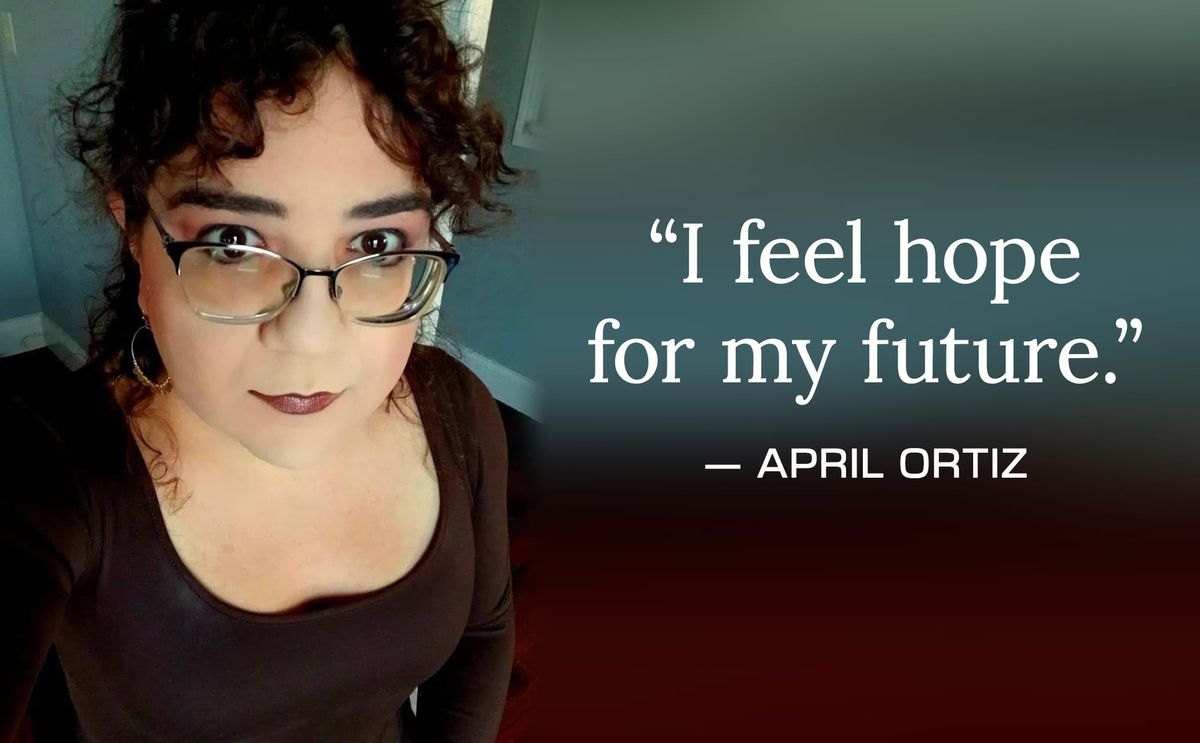
April Ortiz, a transgender woman from South Texas in rural Medina County also said she was shocked and relieved by the results of the midterms.
“I feel hope for my future in a way that I haven't since I came out,” Ortiz said. “It's just really hard to describe how good that feels.”
Already, she feels more upbeat about next year’s legislative session. In the past, she said she found herself looking for out of state jobs every other year, in fear that attacks on trans rights would make life here unbearable.
“I just felt like I was approaching the edge of this precipice,” she said.
She’s far from alone. On the night of November 3, after Texas results had come in, Gwen Howerton, a culture reporter for Chron.com, posted on the social network Bluesky: “Every trans person I know in Texas is texting me about how they don't have to flee right now.”
Similarly, Ortiz feels like she can plan for a future here again. “I don't feel like I have illusions about how difficult it's going to be to undo the damage to my community in Texas,” Ortiz said. “But at the very least, for the time being, the damage has stopped, and maybe we can begin to claw some of our rights back.”
In particular, Ortiz hoped that new Democratic leadership could reverse dangerous policy changes made outside of the legislature. “An easy fix would be restoring the pathway that we had for changing gender markers on legal documents like driver's licenses and birth certificates, because those were things that were shut down by an order from the attorney general, and that's going to be a different person now.”
She also hoped the state would stop threatening young transgender people and blocking their access to healthcare and that these kinds of protections could be enshrined into law someday. “The state needs to lay off of families of trans kids and just leave them alone and let parents and doctors do their jobs.”
Like Tutt, she hopes that the bathroom bill, which she suggested was likely legally unenforceable, gets repealed in the near future. “It makes life really stressful and dangerous for trans people, and it doesn't actually protect anybody.”
And she wants Democrats to learn from the midterms: “The fact that Democrats who did hold the line on trans rights were still elected shows that it's not necessary to throw trans people under the bus, and it's not really helpful.”
Unfortunately, some of the national results in the midterms paint a more somber picture of the state of transgender rights in the U.S. Even as Democrats were elected nationwide, four states passed anti-trans ballot measures: Arizona, Colorado, Nebraska, and Washington. Washington’s new initiative, which would subject participants in girls’ sports to sex-verification procedures, is already the subject of a lawsuit seeking to block its implementation.
The success of these anti-trans initiatives shows there’s still a lot of work to be done in linking the concerns of trans people to other working class or marginalized groups, suggested Shelby Chestnut, executive director of the Transgender Law Center. In addition to directly challenging these harmful laws in court, they said we should also be working to build solidarity and an intersectional understanding of our cause.
Chestnut suggested we start this work by organizing alongside “communities that might be new to some of our issues” by drawing connections between the everyday concerns of trans folk and “what immigrant rights are doing, what racial justice groups are doing, what the you know labor and union folks are doing, and link it all together.”
They suggested that Texans have much to offer in terms of strategy that we’ve learned through many years of difficult struggle against a powerful Republican agenda. “When we win, they have to start listening to our voice.”
While many people were forced to leave Texas to feel safe, Ortiz told The Barbed Wire that this felt far more difficult for her than others, as a trans woman of color and someone with deep family ties in the region. But the success of anti-trans initiatives shows that hatred can take root anywhere, even in “blue” states.
“Transphobia exists everywhere,” Ortiz said. “No place is immune to it, and the people in Washington State are just as susceptible to that as the people in Texas.”
For Ortiz, at least for now, it makes more sense to stay in Texas and organize on behalf of LGBTQ+ rights.
“For me the lesson is that no place is ‘safe.’ We really have to fight for our rights everywhere.”